Ghost Review 2026: The Most Powerful Minimal Blogging Platform for Serious Creators
Want a fast, beautiful blog without the tech stress? Ghost is the platform I personally use and recommend. Built for independent bloggers, it comes with everything you need and nothing you don't.
In this detailed Ghost review, we’re going far beyond surface-level opinions. You’ll see exactly what Ghost is, how it works, what makes it different, where it excels, where it falls short, and whether it actually makes sense for your blogging business in 2026.
We’ll also compare it directly with platforms like WordPress, Substack, and Medium so you can clearly understand where it stands in the modern publishing landscape.
What Is Ghost?
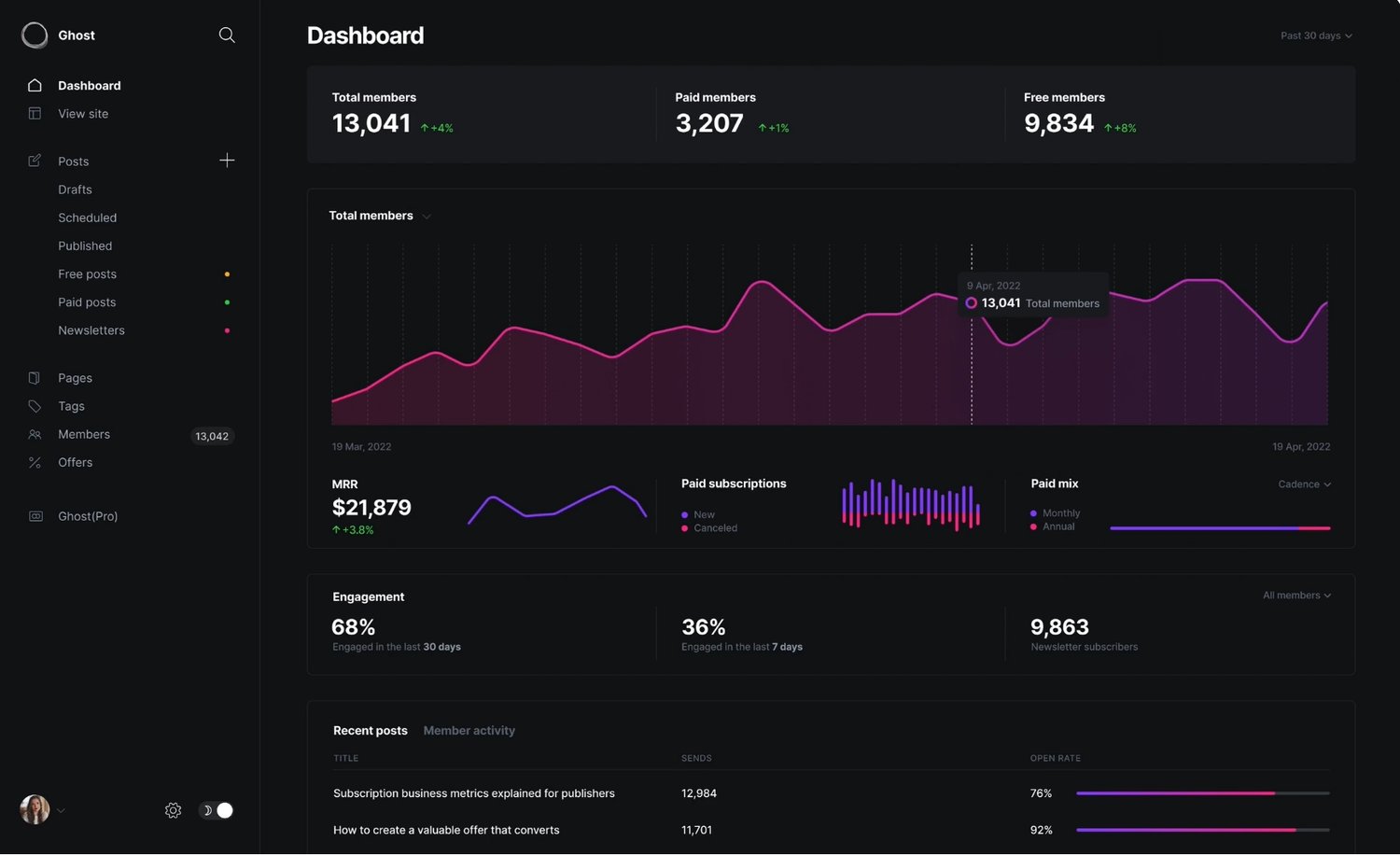
Ghost is an open-source publishing platform designed specifically for modern creators, publishers, and businesses who want a clean, fast, and ownership-focused alternative to traditional CMS systems.
It originally launched as a minimalist blogging tool meant to simplify publishing compared to WordPress. Over time, however, it evolved into something far more powerful: a complete publishing ecosystem built around content, newsletters, and paid memberships.
Unlike traditional CMS platforms that rely heavily on plugins to add functionality, Ghost takes a different approach. It builds core features directly into the system itself, including:
- Blogging and publishing tools
- Email newsletters
- Membership systems
- Paid subscriptions
- Advanced SEO optimization
- Analytics and tracking
- Theme customization
- API and integrations
This “all-in-one-native” structure is one of the biggest reasons creators are increasingly paying attention to it.
You can use Ghost in two main ways:
- Ghost Pro (Hosted) – Fully managed hosting handled by Ghost
- Self-hosted (Open Source) – Install and run it on your own server
Ghost Pro is typically recommended for non-technical users because it removes the complexity of server management while still giving access to the full platform experience.
Ghost as a Blogging Platform
At its core, Ghost is still a blogging platform, but it feels very different from traditional ones. Everything about it is designed to help you focus purely on writing and publishing content.
Writing Experience (Koenig Editor)
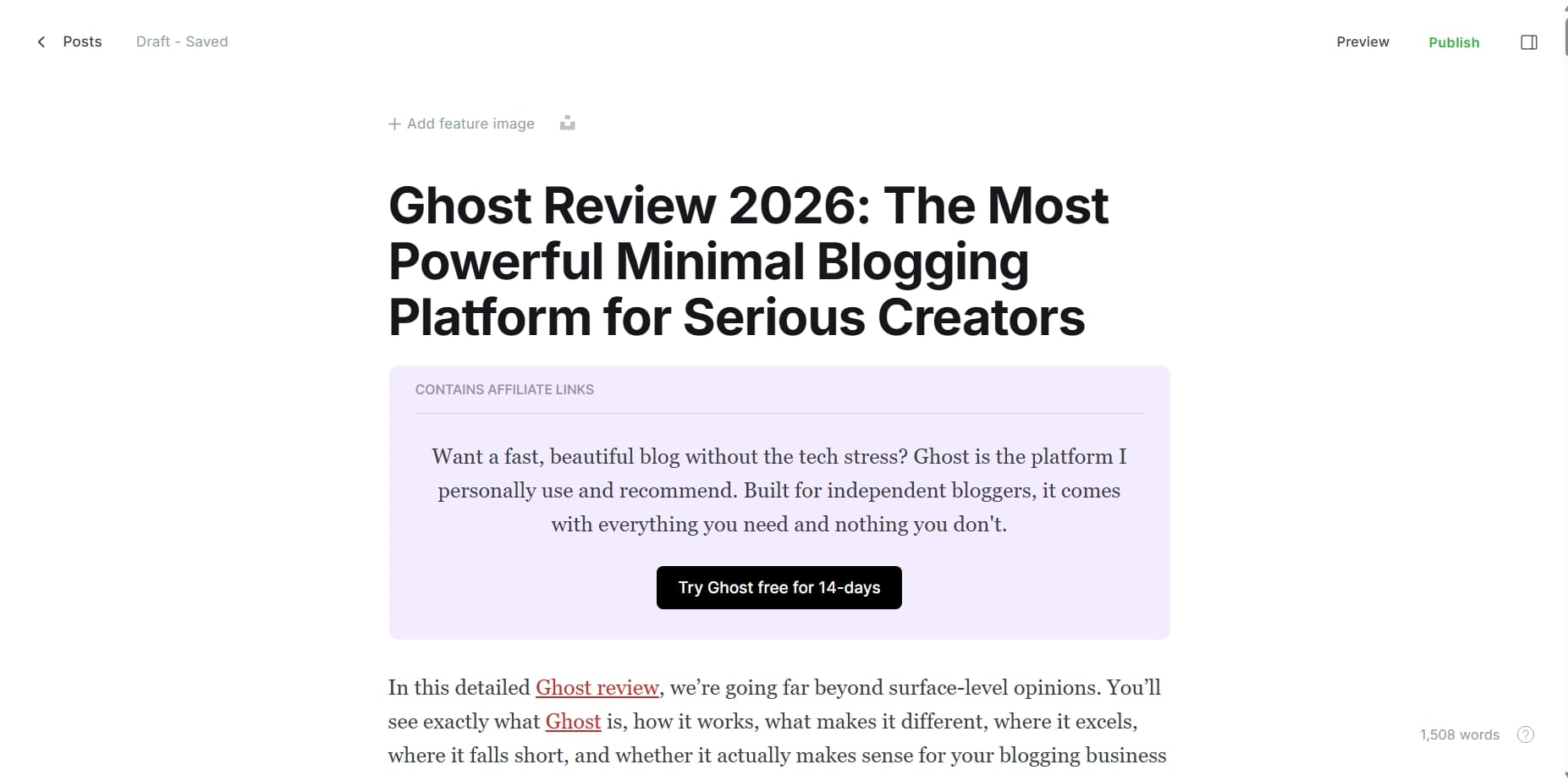
One of Ghost’s strongest advantages is its writing interface, powered by the Koenig editor, which is built around a clean, distraction-free experience.
Instead of overwhelming toolbars or plugin-heavy dashboards, Ghost gives you a writing environment that feels lightweight, fast, and intentional.
Within the editor, you can seamlessly embed:
- Images and galleries
- Videos
- Audio files
- Code snippets
- Buttons and calls-to-action
- Product embeds
- Toggle sections
- HTML blocks
- Email signup forms
The experience feels closer to writing in a modern document editor than managing a traditional CMS.
This simplicity is intentional. Ghost is built for creators who want to publish more and manage less.
Themes and Design Flexibility
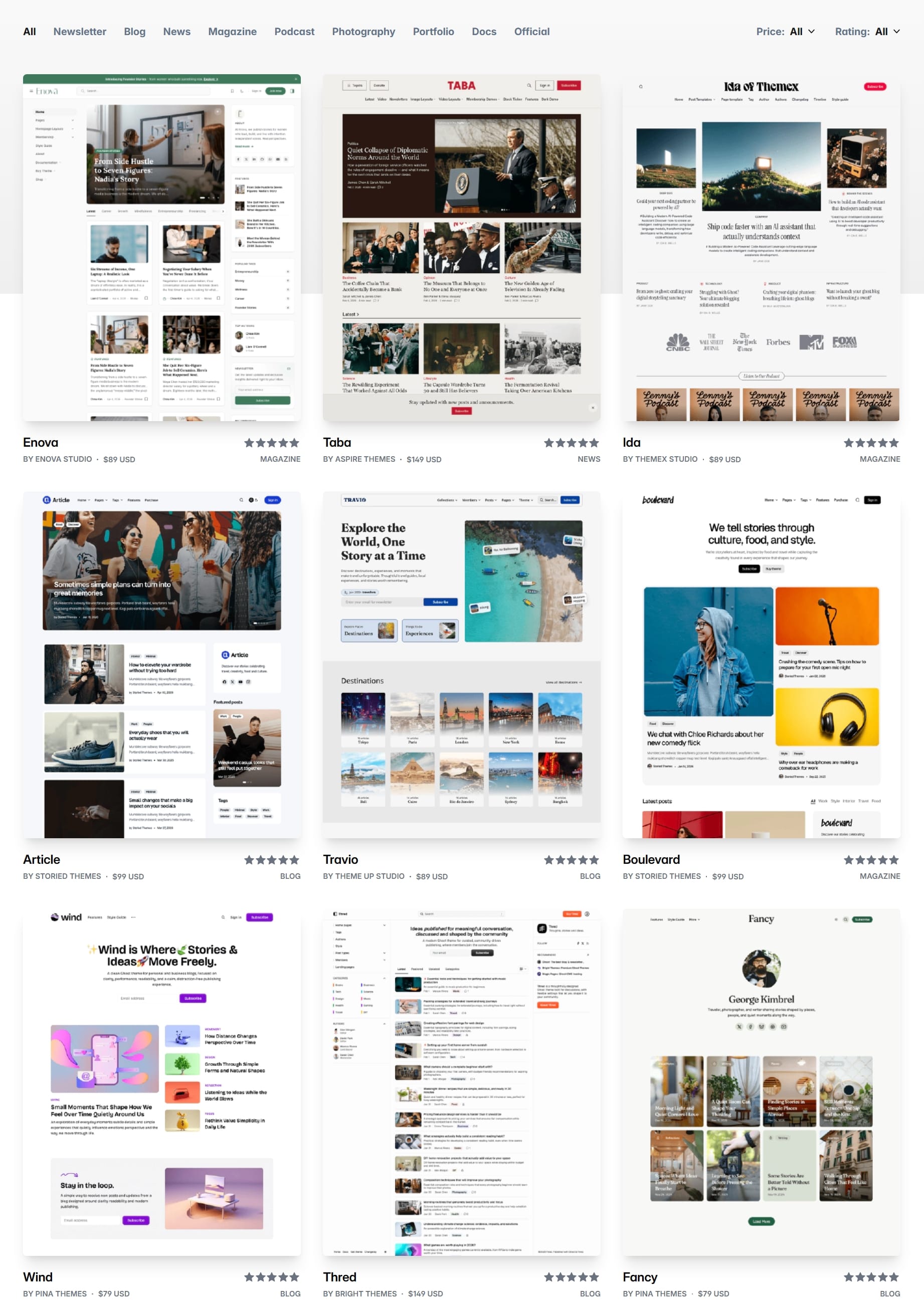
Ghost themes are fully customizable and designed with performance and readability in mind.
You can:
- Install pre-built themes
- Customize layouts and templates
- Modify code using Handlebars
- Adjust typography and spacing
- Create landing pages and custom structures
For non-technical users, themes work out of the box with minimal setup. For developers, Ghost offers deep customization potential without unnecessary bloat.
This balance between simplicity and control is one of Ghost’s strongest design philosophies.
Ghost as a Newsletter Platform
Where Ghost becomes significantly more powerful is in its transformation from a blogging tool into a content + newsletter distribution system. You don't external tools for email marketing, Ghost integrates newsletters natively.
Built-In Email Publishing System
With Ghost, every blog post can also be sent as an email newsletter directly to your subscribers.
You can:
- Publish posts to your website
- Send them as email newsletters
- Segment your audience
- Schedule email delivery
- Manage subscriber lists
This removes the need for external tools like Kit unless you want advanced marketing automation. It creates a unified workflow where your blog and email audience live in the same system.
Memberships and Paid Subscriptions
One of Ghost’s most powerful features is its native monetization system.
You can create:
- Free membership tiers
- Paid subscription plans
- Monthly or yearly billing
- Members-only content
- Gated articles and posts
All payments are handled through direct integration with Stripe, and importantly: Ghost does not charge platform fees on subscriptions.
You only pay standard payment processing fees. This makes Ghost especially attractive for creators building subscription-based businesses or digital publications.
SEO Capabilities
From an SEO perspective, Ghost is extremely well-optimized. It includes all the necessaries, like:
- Custom meta titles and descriptions
- Clean URL structures
- Automatic XML sitemaps
- Canonical tags
- Structured data support
- Fast page performance
- Custom redirects
- Theme-level SEO optimization
Because Ghost is lightweight and performance-focused, it naturally performs well in Google’s Core Web Vitals metrics, which are increasingly important for ranking.
In practical terms, this means Ghost sites often load faster and rank more efficiently than heavier CMS setups.
Analytics and Performance Tracking
Ghost includes built-in analytics that give you a clear view of how your content is performing.
You can track:
- Page views
- Email engagement
- Subscriber growth
- Member activity
- Revenue from subscriptions
It also supports integrations with:
- Google Analytics
- Google Search Console
- Simple Analytics
- Custom tracking scripts
Ghost allows code injection, which makes advanced tracking setups relatively straightforward.
Integrations and Automation
Ghost is built to work well with modern creator workflows.
It supports:
- API access
- Webhooks
- Zapier integrations
- Stripe payments
- CRM tools
- Custom automation flows
This makes Ghost flexible enough for both solo creators and more complex digital businesses.
While it may not have the massive plugin ecosystem of WordPress, its API-first approach makes it more structured and predictable.
Ghost Pricing (Ghost Pro)
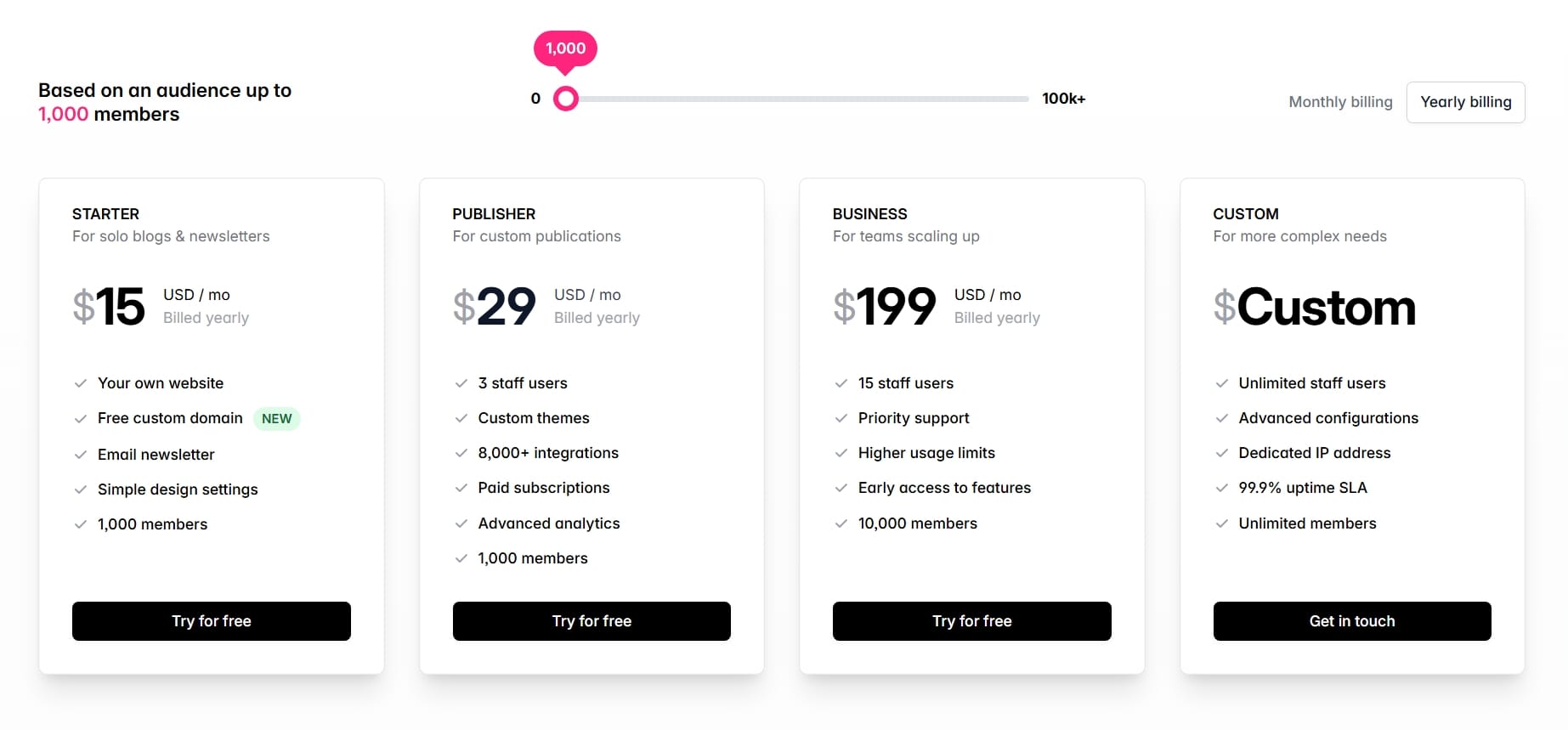
Ghost offers hosted plans through Ghost Pro, which scale based on audience size and features.
There is also a free open-source version, but that requires manual hosting and technical setup.
For most creators, Ghost Pro is the more practical option.
Pros and Cons of Ghost
Pros
- No platform fees on memberships
- Extremely fast performance
- Built-in email newsletter system
- Strong SEO foundation
- Clean, modern writing experience
- Open-source flexibility
- Native monetization system
Cons
- Self-hosting requires technical knowledge
- Fewer plugins compared to WordPress
- Less beginner-friendly for non-technical users
Ghost vs WordPress vs Substack vs Medium
| Feature | Ghost | WordPress | Substack | Medium |
|---|---|---|---|---|
| Website Ownership | Full ownership | Full ownership | Limited | No |
| Custom Domain | Yes | Yes | Yes | No |
| Design & Themes | Customizable | Highly customizable | Limited | Very limited |
| Ease of Use | Moderate | Moderate to complex | Very easy | Very easy |
| Blogging Experience | Clean & focused | Plugin-dependent | Newsletter-first | Writing-first |
| Built-In Newsletters | Native | Plugin required | Native | Limited |
| Memberships & Paid Subscriptions | Native | Plugin required | Native | Partner program only |
| Platform Fees | 0% | 0% | ~10% | Revenue share model |
| SEO Control | Excellent | Excellent | Basic | Limited |
| Analytics | Advanced | Plugin required | Basic | Basic |
| Hosting Included | Ghost Pro: Yes | Self-hosted: No | Yes | Yes |
| Monetization Flexibility | High | High | Moderate | Low |
| Audience Ownership | Full | Full | Partial | No |
| Best For | Independent publishers | Maximum customization | Newsletter creators | Audience discovery |
Who Should Use Ghost?
Ghost is ideal if you:
- Want to build a content business or publication
- Care about SEO and performance
- Want built-in newsletters and memberships
- Prefer clean, minimal systems
- Value ownership over convenience
It is less ideal if you:
- Want drag-and-drop website builders
- Prefer heavy design customization without technical involvement
- Need large plugin ecosystems
Final Verdict: Is Ghost Worth It in 2026?
Yes, Ghost is absolutely worth it in 2026, but not for everyone. Ghost is built for creators who are serious about:
- Publishing consistently
- Growing an audience
- Owning their content ecosystem
- Monetizing through subscriptions or newsletters
- Building long-term digital assets
If that aligns with your goals, Ghost is one of the strongest platforms you can choose.
It moves blogging away from “posting content on a website” and toward building a self-owned publishing business where content, audience, and income all live in one controlled system.
Tired of WordPress headaches? I moved The Solo Blogger to Ghost and never looked back. Ghost is the clean, fast, and powerful platform built specifically for bloggers and creators.