Best Ghost Alternatives
Ghost isn't the only option for building an independent blog. Explore four alternatives for newsletter growth, email marketing, streamlined publishing, and writing in Notion.
Ghost is a popular publishing platform for writers, bloggers, and independent publishers. It combines blogging, email newsletters, and paid memberships in one platform, making it particularly appealing if you want to build a publication around your content.
However, Ghost isn't the only option. You might prefer a platform that's easier to manage, focuses more on newsletter growth, or offers a simpler way to publish articles without running your own CMS.
Here are four Ghost alternatives worth considering, depending on how you want to write, publish, and grow your blog.
1. Beehiiv
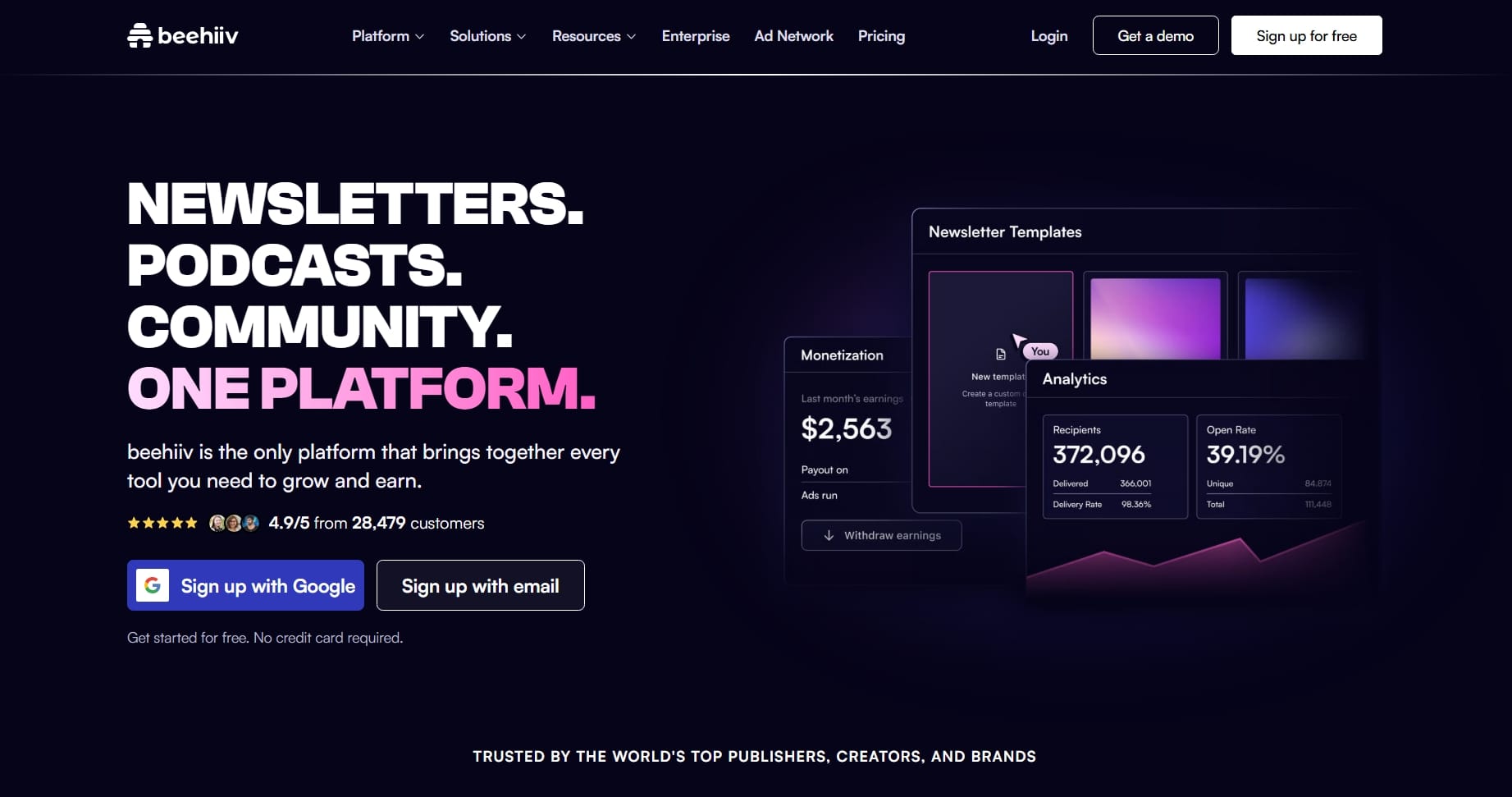
Beehiiv is a newsletter publishing platform that lets you publish articles on a website while building an email list around your content.
Like Ghost, Beehiiv combines a website with newsletter publishing. You can publish content online, send it directly to subscribers, and use a custom domain to build your brand.
Where Beehiiv stands out is its focus on audience growth and monetization. It offers tools such as subscriber recommendations, referral features, analytics, paid subscriptions, and an advertising network. You can also sell digital products to your audience.
This makes Beehiiv a good option if you want your blog to support a newsletter business and explore different ways to earn from your content.
The main trade-off is that Beehiiv is designed primarily around newsletters rather than traditional blogging. If you want extensive control over your blog's theme and publishing setup, Ghost may be a better fit.
2. Kit

Kit, formerly known as ConvertKit, is an email marketing platform built for creators who want to grow an audience and turn it into a business.
Although Kit isn't a direct replacement for Ghost's full publishing system, it offers a newsletter website where you can showcase your content, collect subscribers, and give readers a place to discover your work.
Its biggest advantage is email marketing. You can create signup forms and landing pages, segment subscribers, send newsletters, and automate email sequences to nurture your audience.
Kit also supports creator monetization, including digital products and paid newsletter subscriptions, depending on the features available to your account.
For example, you could publish articles on your blog, use Kit to build your email list, and automatically send new subscribers a welcome sequence that introduces your best content or promotes your products.
The main limitation is that Kit's newsletter website isn't as comprehensive as a dedicated blogging platform. If you need extensive control over your blog's design, content structure, and technical SEO, Ghost offers a more complete publishing environment.
3. Hyvor Blogs
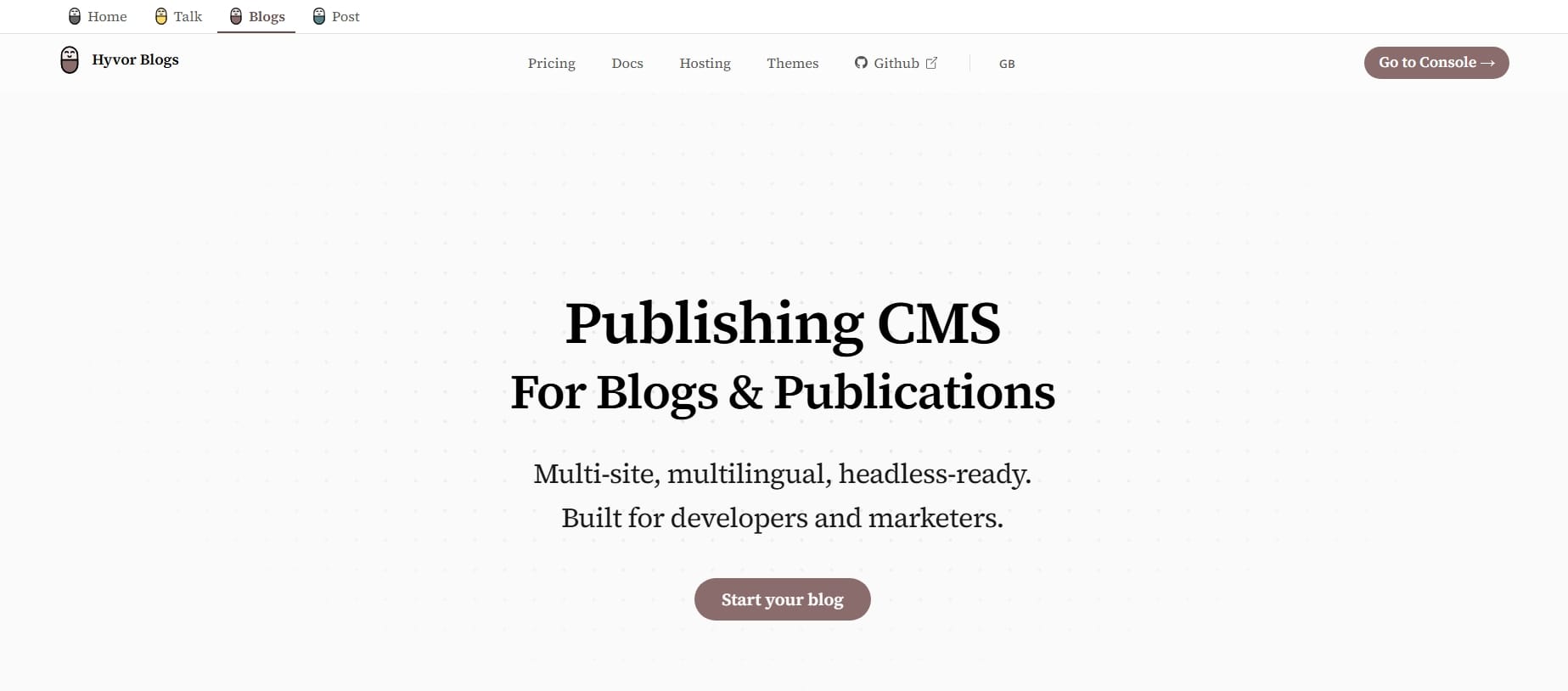
Hyvor Blogs is a blogging platform designed for writers and publishers who want to manage their content without the complexity of a general-purpose CMS.
Unlike Ghost, which combines publishing with native memberships and newsletters, Hyvor Blogs focuses primarily on blogging. It includes a writing editor, customizable themes, custom domains, SEO tools, RSS feeds, and support for multiple authors and languages.
One of its main advantages is that you don't need to install plugins to get essential blogging features. The platform handles technical maintenance, security updates, and performance optimization for hosted blogs.
Hyvor Blogs also integrates with Hyvor Talk for comments and Hyvor Post for newsletters, giving you access to a connected publishing setup.
If you want more control, Hyvor Blogs is open-source and can be self-hosted. It also supports headless publishing, allowing you to use its content management system with a separate website frontend.
The main difference from Ghost is that Hyvor Blogs doesn't provide the same native paid-membership publishing system. If recurring reader subscriptions are central to your business, you'll need to consider additional tools.
4. Feather
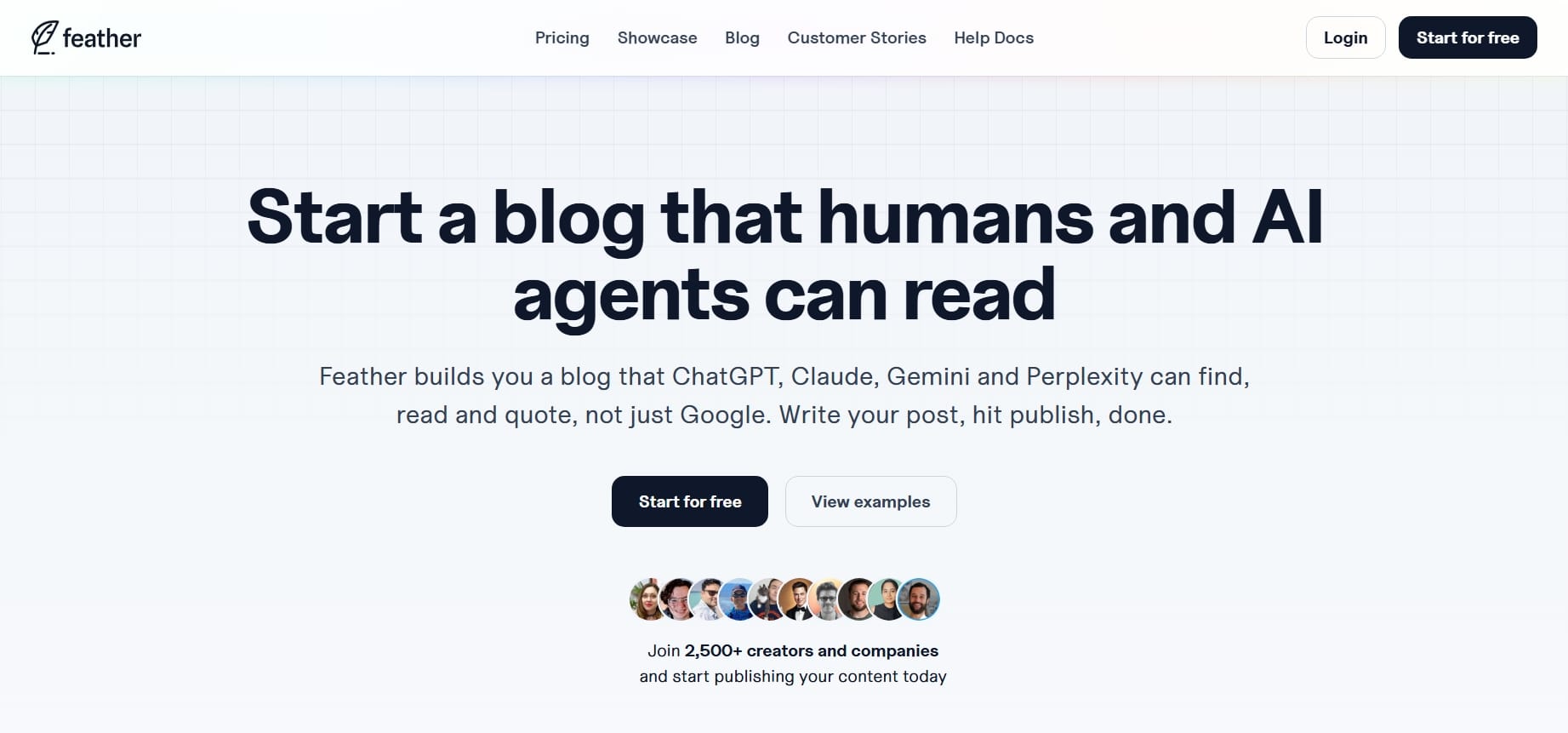
Feather is a blogging platform built around Notion, making it an interesting alternative to Ghost for writers who prefer Notion's editor.
Instead of drafting articles inside a traditional CMS, you can write and organize your content in Notion and use Feather to publish it as a blog.
This workflow is particularly convenient if you already use Notion to manage your writing ideas, research, and editorial calendar. You can continue working in a familiar environment while Feather handles the process of presenting your content as a website.
Feather also offers blogging features such as custom domains, SEO settings, RSS feeds, analytics, and customizable designs, helping you create a branded publication without managing WordPress-style plugins or server maintenance.
However, Feather's Notion-based workflow may not suit everyone. If you prefer a dedicated writing and publishing dashboard, or need more extensive control over your content management system, Ghost may be a better option.