Best Substack Alternatives
Substack makes it easy to publish articles, send newsletters, and build a paid subscriber base. However, it's not the only way to build a newsletter business or earn money from your writing.
Depending on what you want to achieve, you might prefer a platform with more control over your website, better email marketing automation, additional monetization options, or a dedicated online store for your digital products.
Here are six Substack alternatives worth considering if you want to build your own publication, grow an email list, or turn your content into a business.
1. Ghost

Best for: Writers who want their own publication and paid memberships
Ghost is one of the strongest Substack alternatives if you want to build an independent publication around your writing.
Unlike Substack, which combines publishing with its own reader network, Ghost gives you more control over your website's design, content, and branding. You can use it to publish articles, send email newsletters, and offer paid memberships from your own website.
Ghost includes native newsletter publishing, subscriber management, and recurring paid subscriptions with no fees. You can also customize your website using themes, configure your SEO settings, and connect additional tools as your publication grows.
Another advantage is that Ghost is open-source software. You can host it yourself if you want more technical control, or use Ghost(Pro) if you prefer a managed service.
The trade-off is that Ghost requires more setup than Substack, especially if you choose self-hosting. You'll also need to attract readers to your own publication rather than relying on Substack's existing discovery network.
Choose Ghost if you want to build an independent publication with your own branding, website, newsletter, and paid membership business.
2. Beehiiv
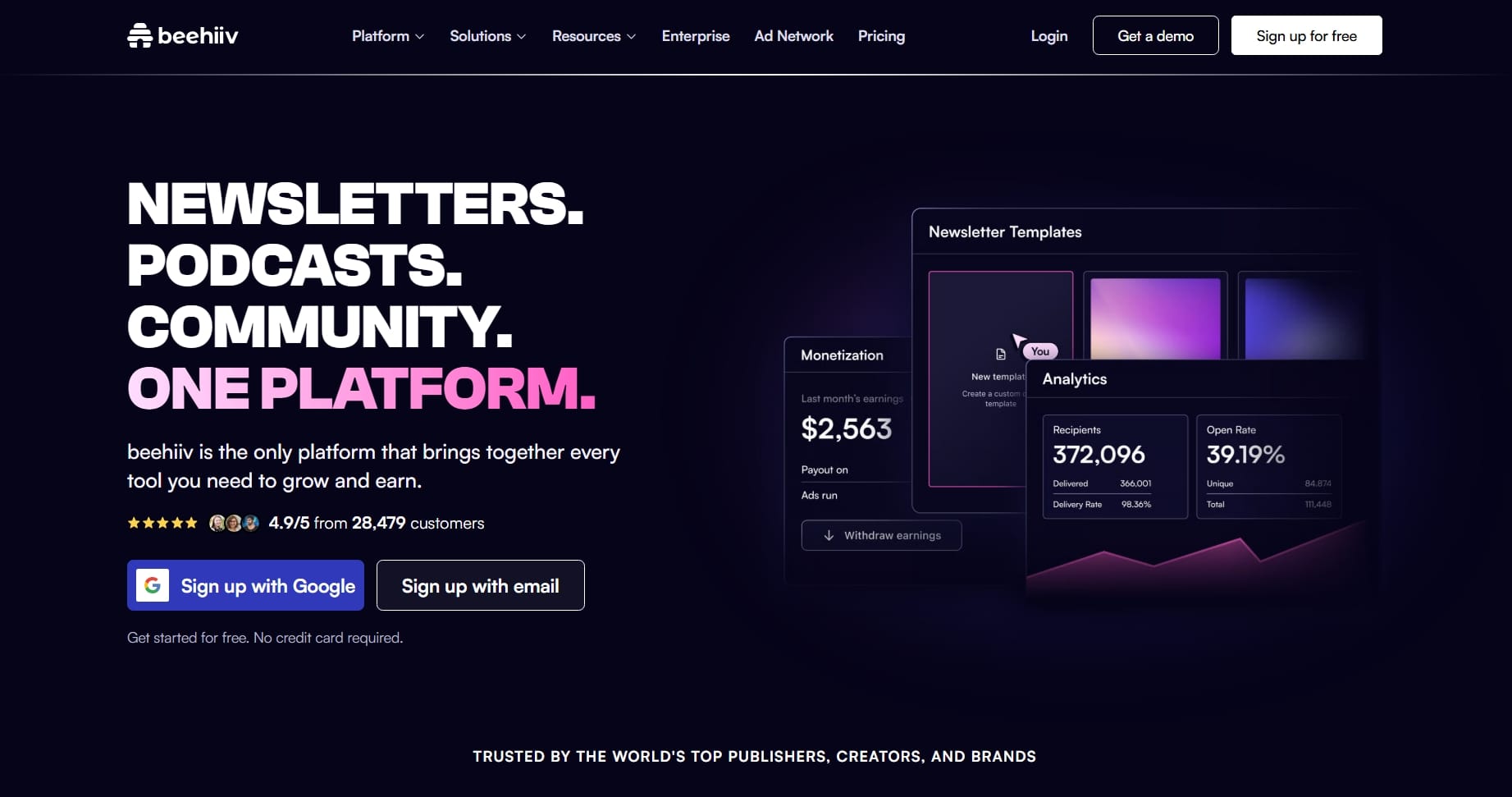
Best for: Newsletter creators who want audience growth and monetization tools
Beehiiv is a newsletter publishing platform designed for creators who want to grow their email audience and make money from their content.
Like Substack, Beehiiv lets you publish newsletter issues that readers can also access online. However, it puts greater emphasis on newsletter growth, analytics, and monetization tools.
You can build a website for your newsletter, collect subscribers, track audience engagement, and use referral and recommendation features to attract new readers. Beehiiv also offers an advertising network and other monetization options, including paid subscriptions and digital products.
This makes it appealing if you want your newsletter to become a standalone media business rather than simply a way to distribute your blog posts.
Behiiv is also relatively easy to get started with because you don't need to manage your own hosting or maintain a separate content management system.
However, some of its more advanced features require a paid plan.
Choose Beehiiv if your priority is growing a newsletter, understanding your audience, and exploring multiple ways to monetize your readership.
3. Kit
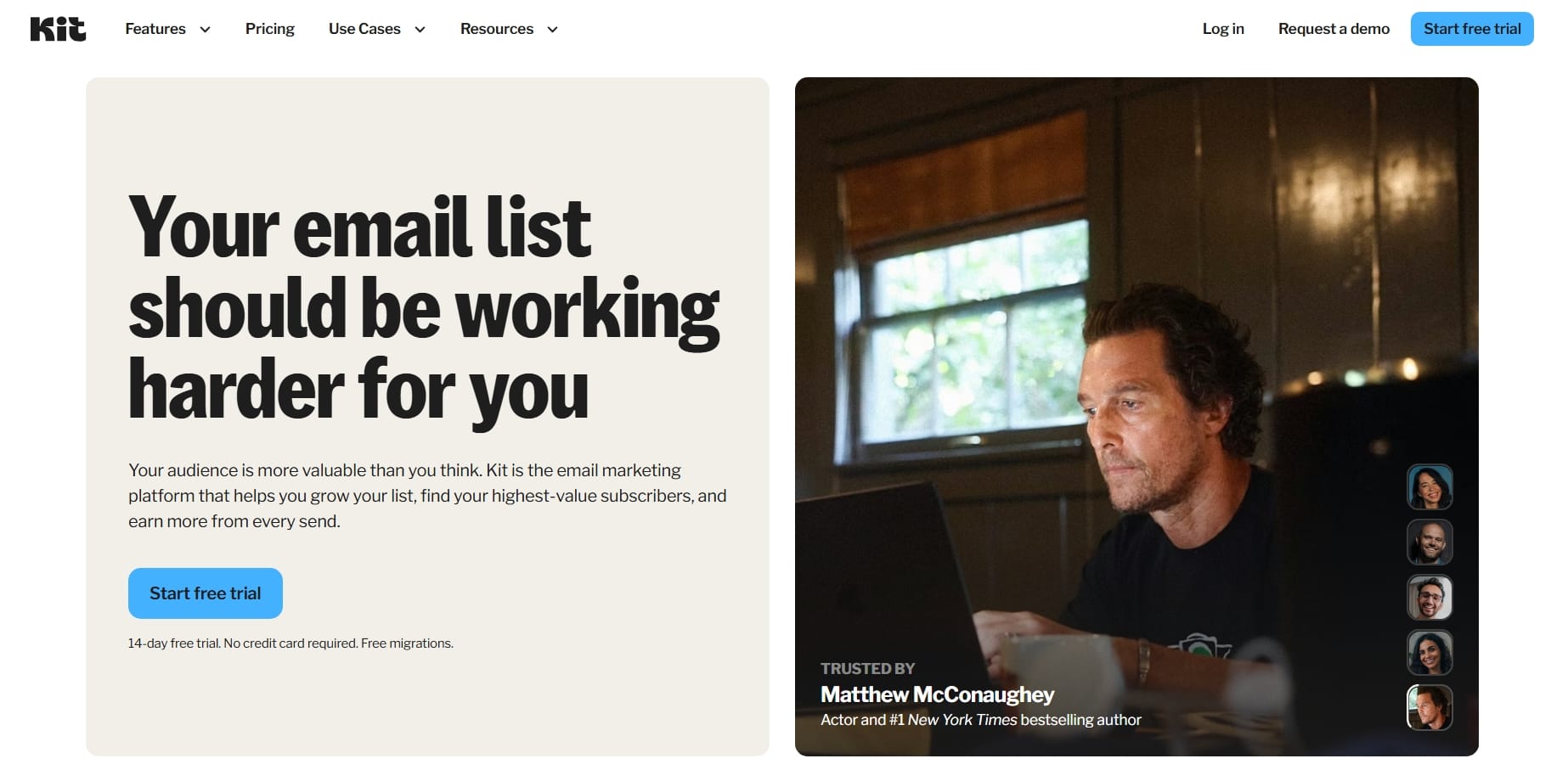
Kit, formerly known as ConvertKit, is an email marketing platform built around the needs of creators, writers, bloggers, and online business owners.
Rather than focusing primarily on a public newsletter publication, Kit helps you build an email list and develop relationships with your subscribers through newsletters, automated email sequences, and targeted campaigns.
You can create signup forms and landing pages, segment subscribers based on their interests, and set up automated email sequences that deliver content or promote offers without requiring you to send every email manually.
Kit also supports creator monetization. Depending on the features and payment options available to you, you can sell digital products, memberships, and paid newsletter subscriptions directly to your audience.
This makes Kit particularly useful if your newsletter is part of a larger business. For example, you could send free educational emails, promote an ebook, and automatically follow up with subscribers who purchase a product.
The main difference from Substack is that Kit is more focused on email marketing and creator businesses than on providing a complete, public-facing publication with a built-in reader community.
Choose Kit if you want to grow an email list, automate your marketing, and turn subscribers into customers for your products or services.
4. Buttondown

Best for: Writers who want a simple, no-frills newsletter
Buttondown is a minimalist newsletter platform for writers who want to publish emails without dealing with an overly complicated marketing system.
Its straightforward writing experience makes it a good option for independent writers, bloggers, and people who prefer to focus on their words rather than spend time designing elaborate email campaigns.
You can write and send newsletters, manage subscribers, and organize your publishing workflow without needing a full website-building platform. Buttondown also supports features such as paid newsletters, custom domains, integrations, and Markdown-based writing.
Another appealing aspect is its emphasis on privacy and simplicity. It is designed to keep the newsletter workflow relatively lightweight instead of overwhelming writers with a large collection of marketing features.
Compared with Substack, Buttondown offers a more minimal publishing experience, but it doesn't provide the same kind of built-in reader discovery network. Its website and design capabilities are also less extensive than those of a dedicated publishing platform.
Choose Buttondown if you want a lightweight newsletter tool that lets you write and send emails with minimal distractions.
5. GetResponse
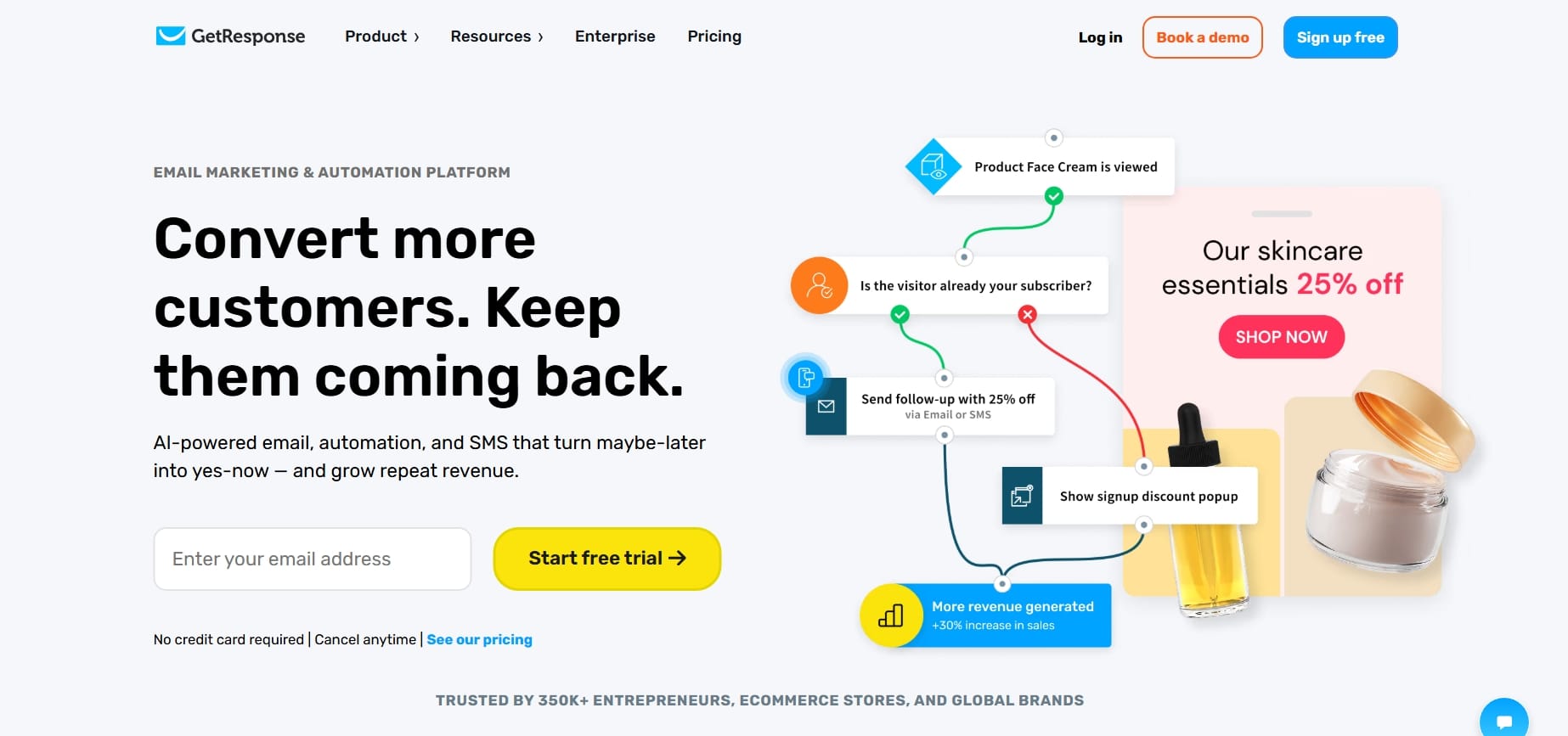
Best for: Creators who want newsletters, email automation, and marketing tools
GetResponse is an email marketing platform that can work as a Substack alternative if you want more than a simple newsletter publishing tool.
It combines email newsletters with marketing automation, signup forms, landing pages, and tools for building campaigns that help you grow an audience and promote your offers.
For example, you could publish a weekly newsletter, create a landing page to attract subscribers, and set up an automated welcome sequence that introduces new readers to your best content.
GetResponse also offers features for creators and businesses looking to sell products, promote courses, or build more sophisticated marketing funnels. Its available tools depend on the plan you choose.
Compared with Substack, GetResponse is less focused on public-facing newsletter publishing and more focused on email marketing and audience conversion. It can be especially useful if your newsletter supports a business with several products, services, or marketing campaigns.
The trade-off is that it may feel more complex than necessary if all you want to do is write and send a simple newsletter.
Choose GetResponse if you want your newsletter to be part of a broader email marketing strategy, with automation and tools for growing your business.
6. Sellfy
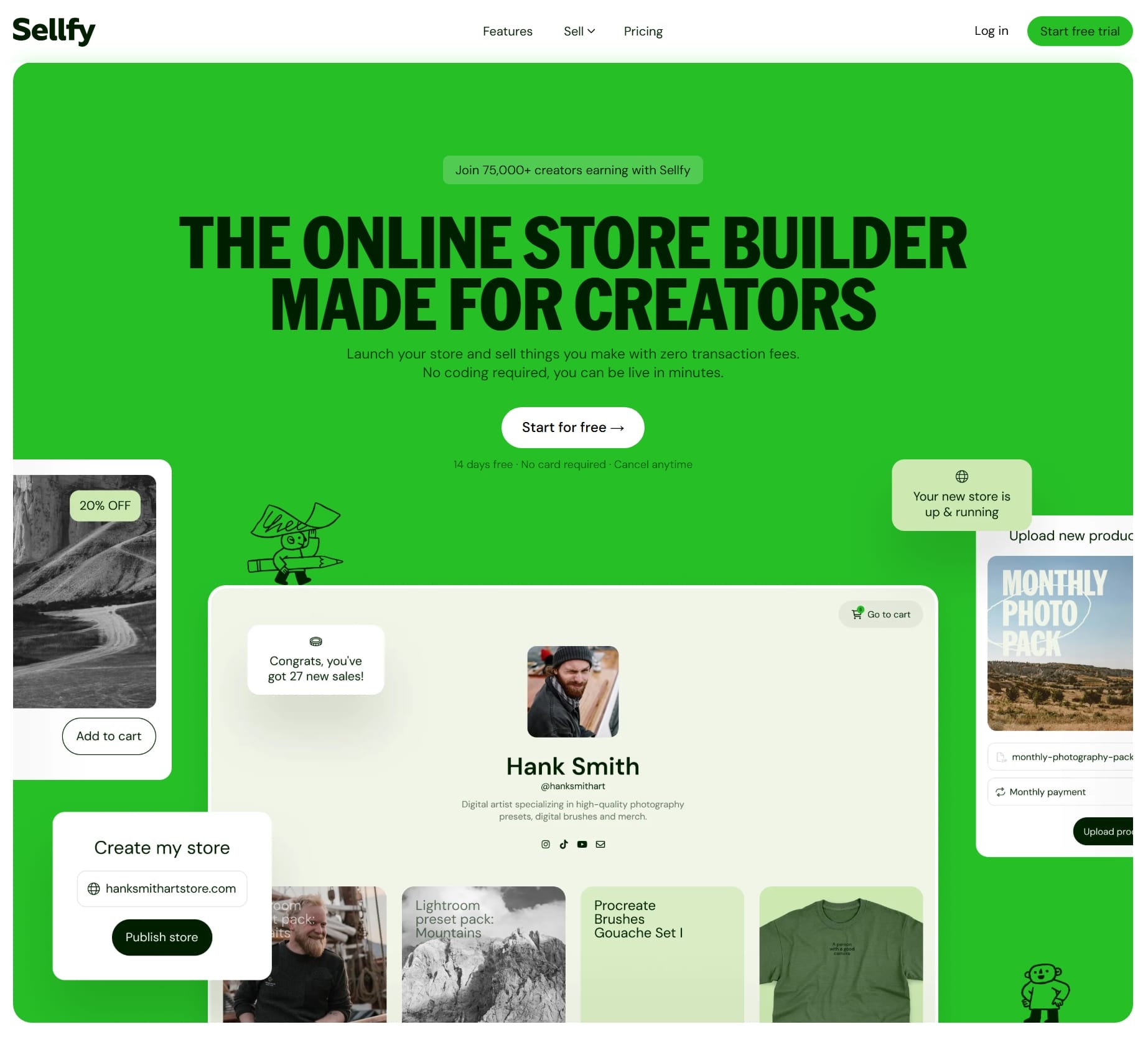
Best for: Writers and creators who want to sell paid newsletters, digital products, and merchandise
Sellfy is an e-commerce platform that lets you monetize your audience through paid digital subscriptions, email marketing, digital downloads, and print-on-demand merchandise.
Unlike Substack, Sellfy gives you a storefront where you can sell multiple types of products alongside subscription-based content. You can use its built-in email marketing tools to communicate with subscribers, share updates, and promote new products, while recurring subscriptions let you charge readers for ongoing digital content.
You can also sell ebooks, templates, and other digital products, or create branded merchandise such as T-shirts and hoodies without managing inventory or fulfillment yourself.
Choose Sellfy if you want to monetize your audience through paid newsletters and digital subscriptions, email marketing, digital products, and print-on-demand merchandise from one platform.
Read Some Our Review
 Faye

 Faye