12 Free Traffic Sources Every New Blogger Should Use to Grow Faster in 2026

Want a fast, beautiful blog without the tech stress? Ghost is the platform I personally use and recommend. Built for independent bloggers, it comes with everything you need and nothing you don't.
Traffic is one of the most important parts of building a successful blog and fortunately for us bloggers, there are more free traffic opportunities available today than ever before.
One of the biggest misconceptions new bloggers have is believing that once they publish content, people will somehow magically discover it. Unfortunately, that is not how blogging works.
You can spend five hours writing the perfect article, hit publish, and weeks later realize nobody has read a single word. And it's not because your content is bad or because your writing is poor. But simply because you have not yet learned one of the most important parts of blogging: distribution.
The internet is very crowded. There are millions of blogs competing for attention every single day and if you do not actively learn how to get your content in front of people, even genuinely helpful blog posts will remain invisible.
The good news is that traffic does not always require paid ads. In fact, many of the biggest blogs on the internet built their early growth almost entirely using free traffic sources.
Some traffic channels compound slowly over time. Some can bring immediate visitors. Some help you build long-term authority while others help you build direct relationships with readers.
The smartest thing to do is to combine multiple traffic sources instead of depending on one platform.
I have personally experimented with several of these traffic sources across different websites I’ve built and one thing I can confidently say is this:
Traffic is rarely accidental.
Publishing content is only half the work, getting people to actually see that content is the second half.
So, if you are just starting your blogging journey and wondering how to grow without spending money on advertising, here are 12 free traffic sources I believe every blogger should understand.
Hi, I'm Faye, welcome to The Solo Blogger, a place built for anyone who wants to start blogging the smart way and grow something meaningful online.
1. Search Engine Optimization (SEO)
If blogging were a long-term business for you, SEO would probably be your strongest foundation even with the presence of AI summary.
Search engine optimization simply means creating content that answers questions people are actively searching for on search engines like Google, Bing and Safari.
The reason SEO remains so powerful is because search traffic compounds. A well-written article published today can continue bringing visitors for months or even years.
This is exactly why blogging still remains one of the most attractive online businesses.
When people search things like:
- How to start a blog
- Best email marketing software for bloggers
- Ghost vs WordPress comparison
- How to make money with affiliate marketing
Google shows pages that best answer those questions.
If your article ranks, traffic starts coming consistently without you doing additional work. But SEO is not simply writing articles and hoping Google notices.
You need to understand:
- What people are searching for
- Which keywords are realistic to target
- Search intent behind each topic
- Competitor strength
- How to structure content properly
Two SEO tools I personally recommend:
1. Moz: Moz remains one of the most respected SEO platforms for keyword research, link analysis, domain authority tracking, and understanding search optimization fundamentals. If you are serious about learning SEO properly, it is the best option.
2. Outrank: Outrank is another tool I find useful for understanding ranking opportunities faster, building better content around search intent and backlinks. Outrank also automatically writes and publish search engine optimized blog posts for you, perfect for busy bloggers and companies. It integrates with WordPress, Ghost, Feather, Notion and more.
SEO is slower than social media traffic.
But long term, it often becomes your highest quality traffic source because visitors arrive with clear intent.
2. Pinterest
Pinterest is a great free source for bloggers because it behaves much more like a visual search engine. People go there actively looking for ideas, tutorials, guides, inspiration, products, and solutions. This makes it incredibly valuable for bloggers.
Unlike Instagram or TikTok posts that disappear after a few hours, Pinterest pins can continue circulating for months.
I have seen blog posts continue receiving Pinterest traffic long after being published simply because the pins kept resurfacing.
Pinterest works especially well for blogs in categories like:
- Blogging
- Personal finance
- Productivity
- Recipes
- Health
- Lifestyle
- Small business
- Digital products
The challenge with Pinterest is consistency. Designing pins manually and posting every day quickly becomes exhausting. This is where creation and scheduling tools become useful.
I personally recommend Tailwind.
Tailwind allows bloggers to create multiple pins at once, find the right keywords, schedule pins and post pins at the right time, recycle content, and maintain consistency.
You can also make use of Tailwind for managing your Instagram and Facebook posts if you make use of those platforms. The best part? Tailwind has a free plan for you to try out the platform before commitment.
Pinterest rewards volume, consistency, and design quality. When used properly, it can quietly become a very strong traffic source.
3. Email Marketing
Traffic comes and goes but an email list belongs to you.
- If Google changes rankings tomorrow, your SEO traffic drops.
- If Pinterest changes its algorithm, your reach can disappear.
- If a social media platform suddenly declines, you lose attention.
But when somebody joins your email list, you now have direct access to that reader. You can reach them anytime and market any offers to them. And that is incredibly powerful.
Email marketing helps bloggers:
- Bring back returning visitors
- Build stronger relationships with readers
- Promote affiliate products
- Launch digital products
- Grow newsletter businesses
- Create repeat traffic consistently
I strongly believe every blogger should start building an email list much earlier even if you only have ten visitors a day.
If you blog on software's like Ghost or Beehiiv, you mostly likely won't need Kit since they already have built-in email marketing features.
A lot of bloggers delay email marketing because they think traffic should come first but I promise you, that's the biggest mistake you can ever make.
4. Reddit
Reddit is one of the most misunderstood traffic sources on the internet. If you do it properly, Reddit can send highly engaged readers to your blog. But if you do it badly, Reddit can make people dislike your brand immediately.
The mistake you may make is joining communities and immediately dropping links to your blog.
Reddit communities generally hate obvious self-promotion. So, instead approach Reddit like participation rather than promotion.
Find communities related to your niche and spend time reading and understanding conversations. Become useful first and answer questions genuinely.
Once people begin recognizing your username as someone helpful, sharing your blog posts occasionally feels natural rather than spammy.
For example:
If you run a blogging website and someone asks: "What are the best blogging platforms for beginners?". You can answer thoughtfully and reference a comparison guide you already published.
And because users are highly engaged, traffic quality tends to be excellent.
5. Internal Linking
This is one of the most neglected traffic strategies among new bloggers, I'm also guilty of this mistake when I newly started blogging.
Internal linking simply means connecting your own articles together strategically.
For example: my article about how to start a blog. I naturally link readers toward related content like:
- Reviews
- Best blogging platforms
- SEO guide for bloggers
- Affiliate marketing guide
- Best hosting providers
- Email marketing tools
I do this to every blog post I write including this blog post you're currently reading. I attach important links to relevant keywords on my blog.
This does several important things.
- It keeps readers on your website longer.
- It helps search engines understand your content structure.
- It distributes authority across pages.
- It improves overall site architecture.
- And perhaps most importantly, it helps every article support every other article.
Your articles should constantly support one another. The longer readers stay exploring your site, the stronger your blog becomes.
6. Guest Posting
Guest posting simply means writing content for another website in exchange for exposure. This strategy helps in multiple ways simultaneously.
You gain:
- Referral traffic
- Valuable backlinks
- Search authority
- Brand recognition
- Industry relationships
One quality backlink from a respected website often helps more than dozens of low-quality backlinks.
Focus on websites genuinely related to your niche, and when writing guest posts, write some of your best work.
7. Quora
Quora remains surprisingly useful for bloggers who enjoy teaching.
Unlike other social media platforms built around entertainment, Quora is built entirely around questions and answers. People visit Quora because they actively want solutions.
Find questions connected to your niche, write genuinely useful answers and when relevant, mention your own blog content.
For example, if someone asks: "How can beginners start affiliate marketing?"
Instead of dropping a direct link immediately, answer the question properly first. Only then should you mention: "I wrote a more detailed guide on my blog covering this entire process."
Quora traffic is slower but often highly targeted.
8. Substack
Substack has built-in discovery and people browse newsletters directly inside the ecosystem. That means readers can discover your writing before ever knowing your blog exists.
I see Substack less as a permanent home and more as a discovery engine.
You can:
- Publish shorter educational posts
- Build newsletter subscribers and export them
- Share thoughts consistently and comment on other writer's posts
- Redirect readers toward your main website
Even if your main blog exists elsewhere, Substack can quietly introduce new readers to your work.
Treat Substack like an audience funnel and not your final destination.
9. X (Twitter)
The fastest way to grow on X and drive traffic to your blog is by commenting on posts and joining communities with medium to high traffic.
Similar to Reddit, you also have to be genuinely helpful and avoid aggressive self-promotion.
Nobody follows accounts that only promote themselves. Instead, share ideas, share observations, share lessons learned, share industry opinions and become interesting first.
Then occasionally direct people toward deeper blog posts and of course always add the link to your blog on your profile.
10. LinkedIn
LinkedIn may be filled with self-promoting gurus but it also brings some high-quality traffic to your site.
If your blog touches topics like:
- Business
- SaaS
- Marketing
- Freelancing
- Finance
- Productivity
- Career development
LinkedIn can help bring traffic to your blog.
One strategy I particularly like:
Take your long blog post, rewrite the main ideas into shorter LinkedIn posts and publish there consistently. Then direct readers toward the original article for deeper reading.
LinkedIn traffic tends to attract more serious readers compared to entertainment-focused platforms.
11. Medium
Medium already has one major advantage and that is readers already exist there.
Instead of waiting for people to discover your independent blog, Medium allows you to borrow an existing audience. You can republish selected articles there and use them to build visibility.
I would never recommend relying entirely on Medium because platform ownership matters.
But as a secondary traffic channel? It's very useful.
Your blog should always remain home base. Use Medium for distribution just like Susbtack.
12. Benable
Benable is still relatively new compared to other platforms, but its traffic have significantly grown within a year and it keeps growing.
When I joined Benable in May 2025, their monthly traffic was around 100k views, currently (June 2026) their monthly traffic is above one million.
It allows creators to build curated recommendation lists around products, tools, and useful resources. Think of it almost like discoverability through recommendations.
If your blog monetizes through affiliate marketing, Benable creates another traffic opportunity.
You can build lists around:
- Creator software
- SEO resources
- Website builders
- Digital products
- Marketing tools
People discover these recommendation lists and may eventually discover your blog alongside them.
One Thing I've Learned
After building multiple websites over the years, the bloggers who succeed are rarely the ones writing the most content. They are usually the ones who understand distribution.
Most importantly, you do not need to master all twelve traffic sources immediately. In fact, trying everything at once will lead to burnout.
Instead, choose a few channels strategically.
My recommendations for new blogs:
- SEO
- Internal linking
- Email Marketing
- Pinterest and
- Guest posting
Traffic does not magically appear because you published a blog post. It grows when you actively learn how to place that content where people can actually find it.
And honestly? Learning traffic is just as important as learning blogging itself.
I created a Blog Content planner using sheets if you're interested and also a SaaS Affiliate Program Tracker where you can track all your affiliate programs, link, commission and more.
I also created free resources for new bloggers, and you can get them here.
Thanks for reading, feel free to signup and leave a comment below.
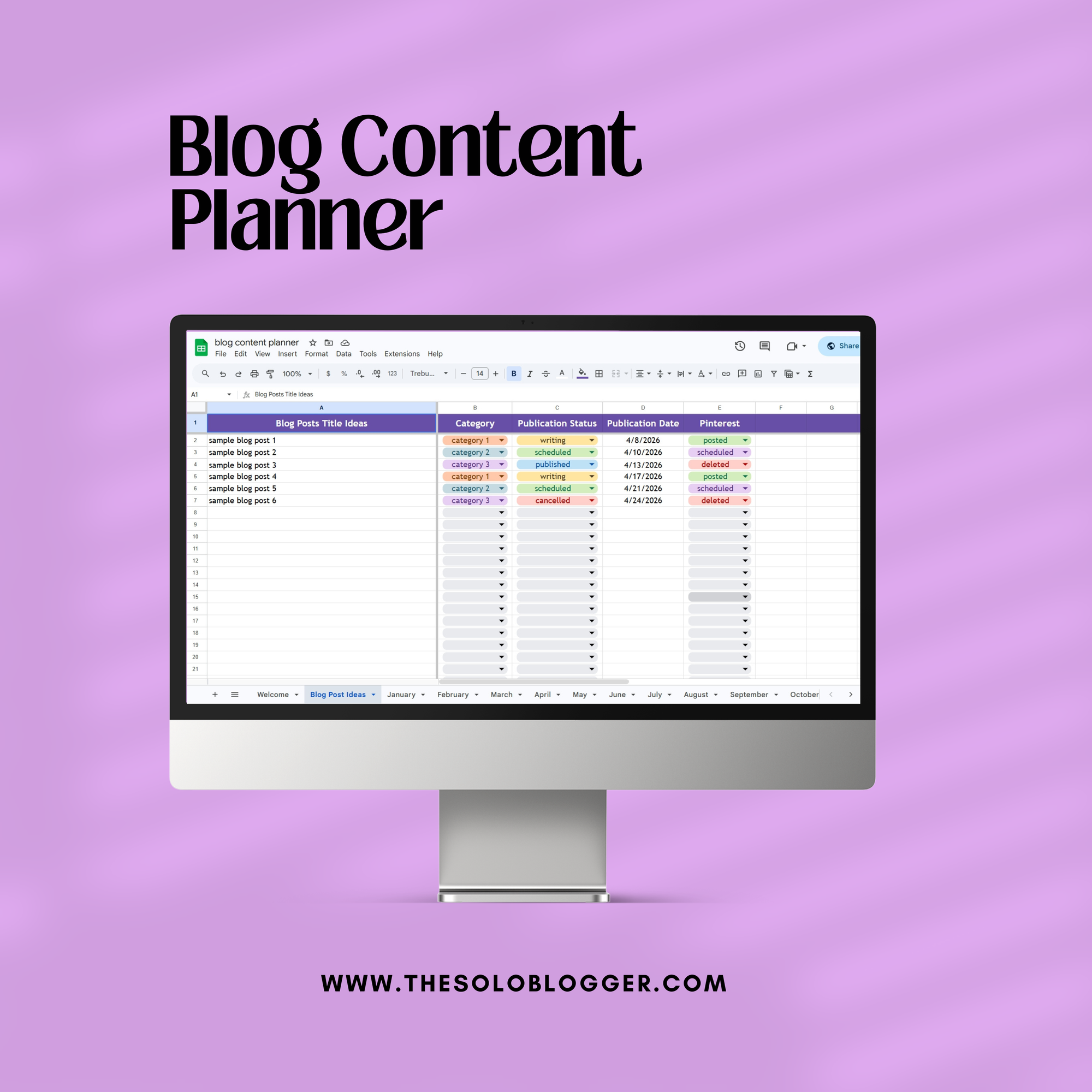
Blog Content Planner
This is the exact content planner I personally use to stay consistent, organized, and intentional with my blog growth. It’s designed for bloggers who want clarity across their content, not scattered ideas and missed publishing dates.
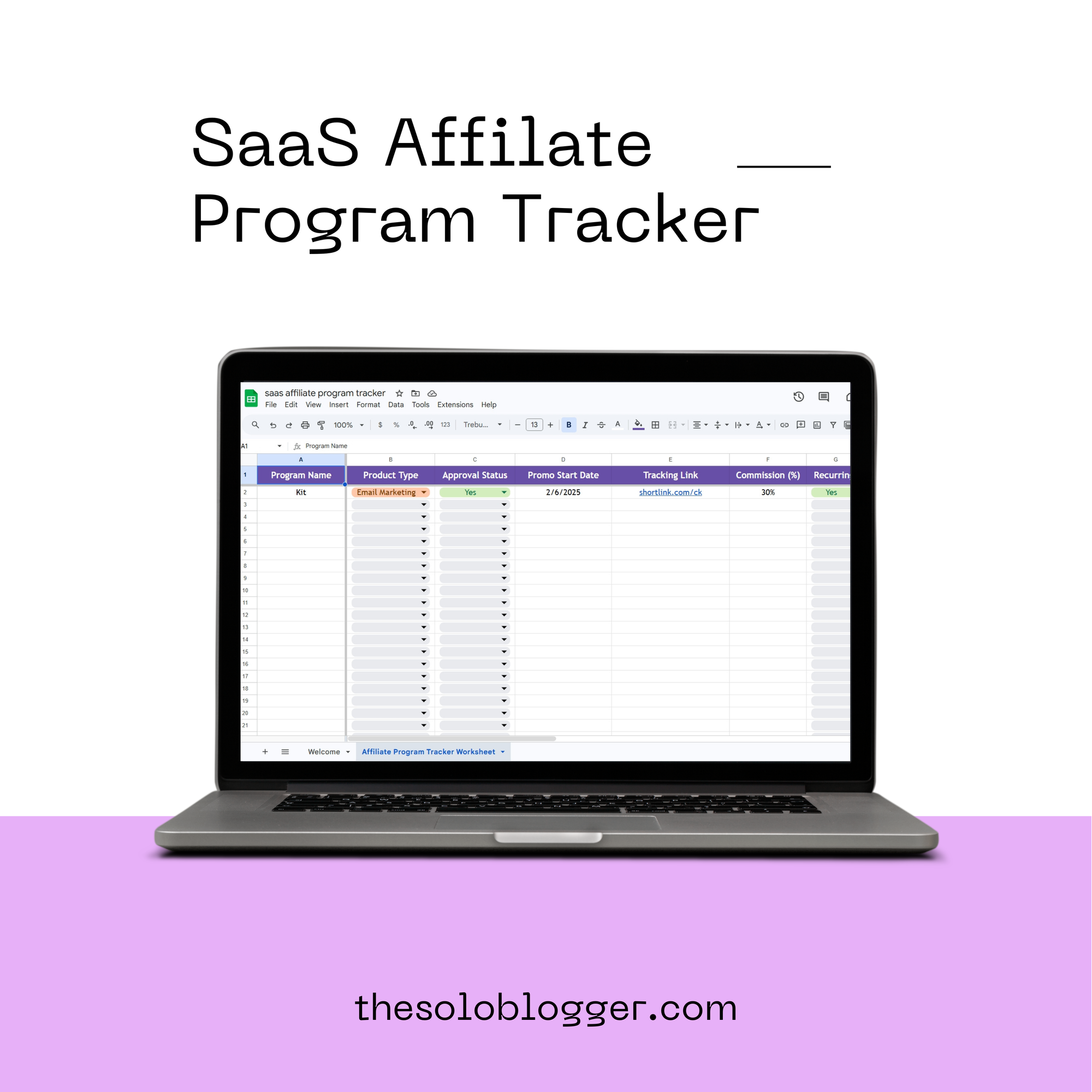
SaaS Affiliate Program Tracker
This is the exact tracker I personally use to manage and grow my SaaS affiliate income without losing track of opportunities, links, or performance. It’s built for bloggers who want to move beyond scattered spreadsheets and start treating affiliate marketing like a real revenue stream.